Construction Waste Collection & Handling
Organize suitable collection and movement of construction and demolition debris.
Construction & Demolition Waste Solutions
Responsible construction and demolition waste management through efficient processing, material recovery, recycling, and resource reuse.
Responsible construction material handling
Construction, renovation, and demolition activities can generate concrete, masonry, metals, wood, and mixed residuals. With suitable handling, materials can be assessed, segregated, and directed to processing or recovery routes where appropriate.
Ecostan Infra's C&D waste management service focuses on organized waste handling, opportunities for material recovery, and responsible management of residual waste. Recovery options depend on material quality, contamination, local requirements, and available facilities.
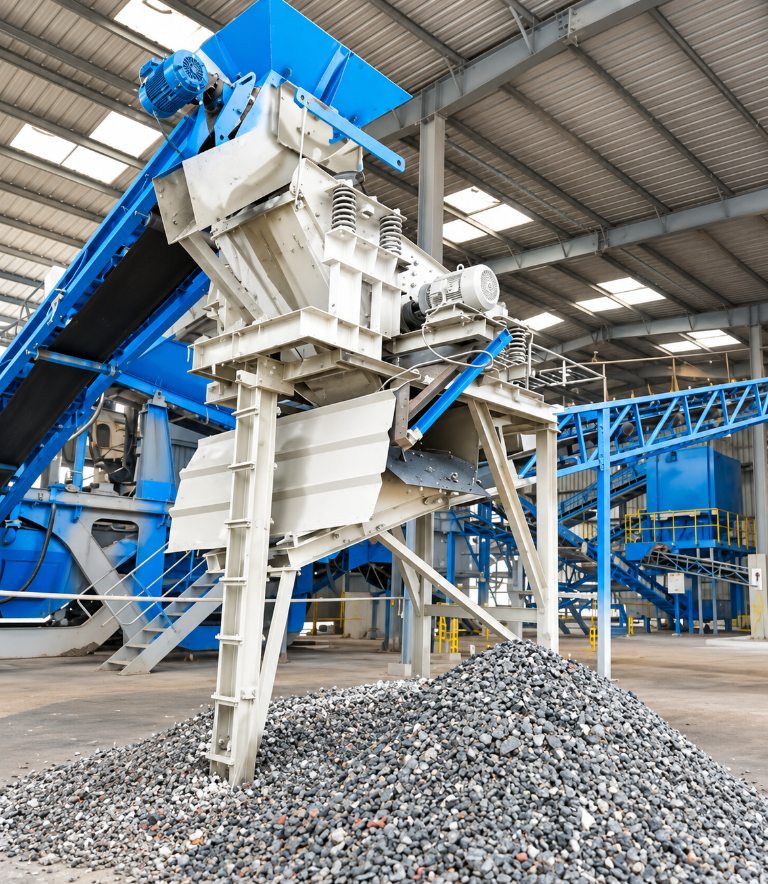
Integrated material handling
Plan each stage around the composition of the waste stream, the project site, and suitable local recovery routes.
Organize suitable collection and movement of construction and demolition debris.
Separate incoming materials into suitable categories for further assessment and processing.
Process suitable mineral fractions into different sizes according to facility and project requirements.
Identify material fractions that may be suitable for recycling or reuse.
Consider suitable applications for processed aggregates, subject to quality and project requirements.
Arrange appropriate handling for material that cannot be recovered through available routes.
The C&D waste processing journey
Each stage can be adapted to material composition, site logistics, and suitable recovery pathways.
Collect construction and demolition waste through an appropriate arrangement.
Move material to a designated processing facility or suitable handling point.
Assess incoming material and separate fractions where appropriate.
Process suitable mineral fractions into different size ranges.
Identify recovered materials for potential recycling or reuse.
Direct recovered materials to suitable uses and manage remaining waste appropriately.
Material recovery
Potential pathways differ by material type, quality, contamination, and the processing arrangements available.
Suitable clean fractions may be crushed or screened for potential use as recycled material.
Assess and separate masonry fractions for processing or an appropriate recovery route.
Sort mineral materials and consider processing based on quality and intended application.
Separate recoverable metal fractions for suitable recycling pathways.
Handle according to material condition, acceptance criteria, and available local routes.
Recovery options depend on material quality, contamination, local requirements, and the capabilities of available processing facilities. Not all materials follow the same process.
Why responsible C&D waste management matters
Identify fractions that may be suitable for reuse or recycling.
Coordinate collection, segregation, transportation, and processing.
Consider recovery routes before directing suitable materials to disposal.
Support more structured management of construction debris.
Explore suitable uses for processed materials where quality requirements are met.
Encourage circular construction practices where practical and appropriate.
Equipment and processing facilities
Processing arrangements can combine material movement, size reduction, screening, and separation as suited to the incoming stream.
Suitable equipment can support the movement and size reduction of selected mineral materials.
Incoming material composition and the intended handling route.
Screening and separation choices depend on material characteristics and facility design.
Material characteristics and the fractions to be separated.
Facility layouts can be planned around incoming material, operating requirements, and recovery pathways.
Site layout, material movement, and suitable recovery pathways.
Why choose Ecostan Infra?
Consider processing and material-handling methods that fit the waste stream and facility.
Identify opportunities to recover suitable materials for potential recycling or reuse.
Align the approach with site logistics, operational requirements, and material characteristics.
Support responsible handling of recoverable materials and remaining waste.
Frequently asked questions
It is material generated during construction, renovation, or demolition activities. It can include concrete, masonry, metals, wood, and mixed residual materials.
Depending on material quality and contamination, concrete, masonry, metals, and other accepted fractions may have recovery or recycling routes.
A typical arrangement may include collection, transportation, inspection, segregation, processing of suitable fractions, material recovery, and responsible residual management. The exact process depends on the waste stream and facility.
Segregation can help identify material types, reduce mixing or contamination, and determine which processing or recovery pathways may be suitable.
Some processed materials may be suitable for reuse or recycled aggregate applications, subject to quality, testing, project specifications, and local requirements.
Use the contact page to share your project location, material types, and service requirements with the Ecostan Infra team.
Let materials move forward
Connect with Ecostan Infra to discuss responsible C&D waste handling, processing, and material recovery solutions for your project.
